Blog: Library Research in Practice

A National Study of Workplace Violence and Aggression

Associate Professor Jane Garner

Libraries are often thought of as safe places. They are spaces where people come to learn, access information, connect with others, or simply spend time without needing to buy anything. Yet over the past several years, concerns have been growing within the library profession about the safety of library workers themselves.

Conversations at conferences, discussions on professional forums, and reports from library managers have pointed to an increase in challenging behaviours directed towards staff. While these stories were becoming increasingly common, there was very little Australian evidence available to help us understand the scale of the problem or how libraries might respond effectively.… Continue reading “A National Study of Workplace Violence and Aggression”

Codesigning public libraries project launches its Toolkit

Philip Hider

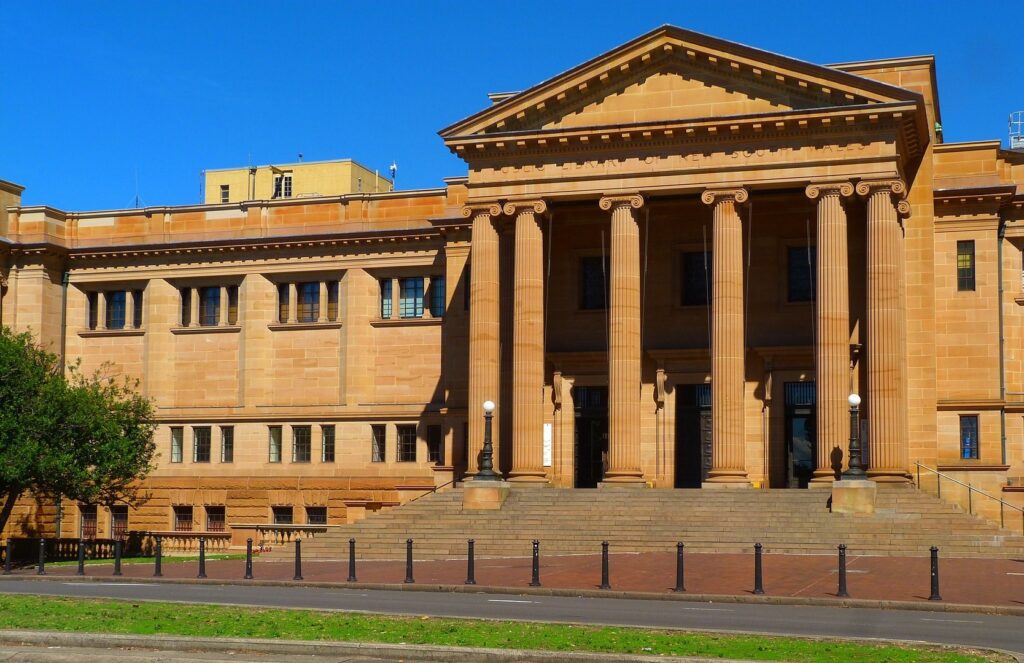
The ARC Linkage project, ‘Designing for Communities with Communities’, has launched its Toolkit to assist public libraries include a genuine ‘codesign’ element in their future space development projects. The Co-designing Public Library Spaces Toolkit is freely available on the State Library of New South Wales website and provides detailed guidance on how to involve community members in the design, or redesign, of their library spaces. The content of the Toolkit is based on the findings from the Linkage project’s two case studies and covers both the planning and carrying out of workshops specifically for the purposes of codesigning public library spaces.… Continue reading “Codesigning public libraries project launches its Toolkit”

Australasian Public Library Conference 2025: Recordings Now Available

Jane Garner

From 1–3 July 2025, the Charles Sturt University Libraries Research Group proudly hosted the Australasian Public Library Conference. Held online to mark 50 years of Library & Information Studies at CSU, the event brought together researchers, practitioners, and community leaders to explore the changing role of public libraries.

Over three days and six themed sessions, participants shared insights into how libraries are evolving to meet community needs. If you missed a session—or want to revisit the conversations—recordings are now available here: https://www.youtube.com/channel/UCCK1lMuHn4SGiy87A-cyKcQContinue reading “Australasian Public Library Conference 2025: Recordings Now Available”

LRG meets with Wagga City Librarians

The Libraries Research Group invited the manager, Christine Bolton, and staff of Wagga Wagga City Library over to the group’s meeting on 1 May, which was held on the Wagga campus as well as online for those members not present in Wagga. Christine and her colleagues provided an overview of the latest developments in the Library’s services and discussed with the group various possibilities for further research collaboration. Highlights of the meeting included a guided tour of one of the librarians’ agile library vans, and a chance to pat one of the Library’s robotic cats!… Continue reading “LRG meets with Wagga City Librarians”

An overview of university presses in Australia and their relationship with libraries

University presses play an important role in scholarly communication, especially in the humanities and social sciences. Yet in Australia, little has been written about them in the last decade. I recently conducted a mapping study of university presses in Australia, and looked at who’s active, what they publish, and how they are structured. The full paper is now available on Figshare.

In total, I identified nine active university presses out of the 42 Australian universities. While this is a small number, it’s not insignificant given our population and higher education size.… Continue reading “An overview of university presses in Australia and their relationship with libraries”

Introducing the project at the Public Libraries South Australia (PLSA) Conference

We were delighted to be invited to introduce our project (The Role of Public Library Services for a Changing Rural Australia) at the Public Libraries South Australia (PLSA) 2025 Conference. The conference was held on 8 and 9 May 2025 at the Adelaide Convention Centre, and Simon Wakeling represented the project in a joint session on the Friday with Professor Helen Partridge, Co-Investigator on another public library related ARC Discovery project that started this year.

It was great to be able to talk about the project to such a large and enthusiastic audience.… Continue reading “Introducing the project at the Public Libraries South Australia (PLSA) Conference”

Public libraries supporting people experiencing homelessness

Group member: Jane Garner

Project website: https://thinkspace.csu.edu.au/librariesandhomelessness/

This three-year project funded by an Australian Research Council DECRA Grant allows me to explore how public libraries can best support people experiencing homelessness or insecure housing. The project has the following aims:

  1. To understand the service, resource and environmental needs of the Australian homeless community that could be met by public libraries in our urban, regional, and remote contexts.
  2. To understand the attitudes and concerns of public library staff, and non-homeless library users in Australian urban, regional, and remote contexts relating to the homeless community being present in their libraries.
Continue reading “Public libraries supporting people experiencing homelessness”

Voices of Change: Harnessing LIS Student Insights to Transform Information Literacy Education with Gen AI and Universal Design for Learning.

Kay Oddone

I’m excited to share that our new research project, funded by the 2024 ALIA Research Grant Award, valued at $10,000, is officially underway. This grant was awarded to our cross-institutional research team, which includes myself, Dr. Lizzie Tait (University of South Australia), and Tabitha Merrell (Charles Sturt University).

Our project is entitled Voices of Change: Harnessing LIS Student Insights to Transform Information Literacy Education with Gen AI and Universal Design for Learning. It aims to explore innovative approaches to reimagining information literacy education by integrating generative AI technologies and Universal Design for Learning principles.… Continue reading “Voices of Change: Harnessing LIS Student Insights to Transform Information Literacy Education with Gen AI and Universal Design for Learning.”

Library cataloguing at a crossroads

Philip Hider

Cataloguing and classification, or nowadays more commonly referred to as ‘collection access’ or ‘metadata librarianship’, or similar, has been a core activity of library operations for as long as librarianship as a profession has existed, i.e., well over 100 years, yet for a long while now has been perceived as being somewhat on the back foot, especially with collections going increasingly online, and with libraries increasingly prioritising ‘front desk’ services when allocating their limited staff resources. I last surveyed the state of play for the ‘cat & class’ branch of librarianship in Australia a decade ago, and this year thought it was time to update those findings, to identify any continuing or new trends.… Continue reading “Library cataloguing at a crossroads”

Australian women librarians: their published history

A/Prof Mary Carroll

Over the last few months, I have been investigating the  experience of women in librarianship in Australia using the extant literature to see how this experience has been documented. This small project came about in response to a request to contribute to a festschrift in memory of highly regarded US scholar Mary Niles Maack. Maack ‘s areas of expertise were in comparative librarianship, the history of the book, and women’s history.  Her works are both insightful and far reaching laying out templates for future research in these areas.… Continue reading “Australian women librarians: their published history”

Custom AI tools for cataloguing!

The rise of generative AI has sparked debates across professions, including within the library and information sciences, about its potential to transform specific tasks. Among the many specialised tasks that information professionals perform, cataloguing and creating metadata records are particularly complex.

Many wonder whether AI tools like ChatGPT can perform cataloguing or create metadata with reasonable accuracy and reliability. Some have conducted experiments to test AI’s capability in this area. Such experiments include using ChatGPT for LCSH Subject assignment, identifying errors in catalogue records, creating MARC records using RDA or DC, and creating MARC21 using RDA.… Continue reading “Custom AI tools for cataloguing!”

Gender parity in Australian journals’ editors

Although there is no conclusive evidence, there have been at least speculations in the past about the impact that the gender of editors, reviewers and authors might have on the fairness of decisions made for the publication of manuscripts submitted to scholarly journals. As a result, tens of studies in the past have looked at gender parity (the notion of 50:50 representation) and equity (the notion of proportional representation compared to the broader population) of journal editorial positions. To mention a few more recent ones, studies in urology (1), general surgery (2), psychology (3), endocrinology (4), neurology (5), library science (6), and mathematics (7) all point to under-representation of women in various journal editorial positions.… Continue reading “Gender parity in Australian journals’ editors”

Library Architecture Project

Annie Godfrey

Over the last decade a number of new public libraries have been built in NSW, include the eight in the photographs below. Current research by Annie Godfrey and other LRG members is exploring these libraries’ building architecture, which, as the photos show, can vary quite considerably. The project will investigate what this library architecture has in common, how it responds to and supports contemporary library functions, and how it reflects contemporary and historic expectations as to what a library should, or can, be.… Continue reading “Library Architecture Project”

Truth and Dare: Highlights from the ALIA Conference 2024

Kay Oddone

It is hard to believe that it has been several months since I attended the ALIA National Conference in Adelaide, held from May 6-9, 2024. Although time has flown, it is still useful to draw a breath and reflect upon my experiences and to share my takeaways, especially as this was the first time I had attended this particular conference. 

With the theme being “Truth and Dare,”, it was clear from the start that this was going to be a thought-provoking learning experience.… Continue reading “Truth and Dare: Highlights from the ALIA Conference 2024”

2024 National Library of Australia Asia Study Grant recipient – a reflection

Anita Dewi

I had opportunity to spend all February this year at the National Library of Australia (NLA) as an Asia Study Grant recipient. I felt so privileged! During the four-week period, I explored the NLA’s Indonesian collections, researching libraries, librarianship, and librarians in Indonesia – the past and present. Most resources I consulted were in Bahasa Indonesia (the Indonesian language), so I found my Indonesian language competence very helpful. The NLA collections on this topic (and I’m sure also beyond) are amazingly comprehensive.… Continue reading “2024 National Library of Australia Asia Study Grant recipient – a reflection”

Co-designing libraries: progress report

Philip Hider

The ARC Linkage Project, Designing for Communities with Communities, has come on leaps and bounds since it started in May last year. It’s always going to be a bit challenging to synchronise different library development projects, but our project has been fortunate enough to have some very enthusiastic and committed partners on board, and we’re now in the thick of data collection and the actual co-design. The series of community workshops has already been completed for one of the case studies, and the second series, for another library, is underway.… Continue reading “Co-designing libraries: progress report”

Ethnography and LIS Research

Simon Wakeling, Philip Hider and Jane Garner

Most readers of this blog will likely be at least somewhat familiar with ethnography as a research method. The approach has a long history, originating in the social and cultural anthropological disciplines of the early 1900s, but has since been adopted by many other fields. Ethnography is a holistic method, often incorporating different forms of data collection, including document analysis, interview etc. At ethnography’s heart, though, is observation. An ethnographic study seeks to reveal something of the social phenomenon it investigates through participative fieldwork, with the researcher often spending a considerable amount of time embedded in the community they are seeking to understand.… Continue reading “Ethnography and LIS Research”

Reflections on the Association for Information Science and Technology (ASIS&T) Conference 2023

Waseem Afzal

Recently I got an opportunity to attend the 86th ASIS&T Annual Conference in London. The theme of this year’s conference was ‘Making a Difference: Translating Information Research into Practice, Policy, and Action.’

I kick-started by attending a half day workshop on ‘Social media research: challenges and opportunities.’ This workshop was a combination of paper presentations and a keynote by Prof. Adam Joinson from the University of Bath. The keynote was highly thought provoking and raised many questions about theory, role of theory in social media research, and current online landscape as dominated by Big Data and AI.… Continue reading “Reflections on the Association for Information Science and Technology (ASIS&T) Conference 2023”

Avenues for Collaboration Between Libraries and Serious Leisure Enthusiasts

YAzdan mansourian

My research into the information experiences of serious leisure enthusiasts shows that they often engage in an ongoing learning journey related to their hobbies or amateur activities. Whether learning to play a musical instrument, grow bonsai, or engage in any other hobby. They actively seek, share, produce information and look for various learning opportunities. The motivation behind this relentless quest for knowledge and skill lies in the joy and fulfilment derived from their passions. In this process, they often form close bonds with libraries, which often become their favourite places because they offer resources and space, helping them with their leisure activities.… Continue reading “Avenues for Collaboration Between Libraries and Serious Leisure Enthusiasts”

Reflections on the International Association of School Libraries (IASL) conference

Kay oddone, kasey garrison, krystal gagen-spriggs, monique shephard, lee fitzgerald & di ruffles

The Teacher Librarianship team along with several of our fantastic adjunct staff were thrilled to be able to engage in professional learning and networking at the recent International Association of School Libraries (IASL) conference in Rome, Italy.

Between us we presented six papers;

  • Understanding the World: How Australian teacher librarians define information literacy (Kay Oddone and Kasey Garrison);
  • “It was a real eye-opener”: Young adult literature and adolescent mental health (Monique Shepherd and Kasey Garrison);
  • Failure to flourish: Students and teacher librarians in Australia (Lee Fitzgerald, Alinda Sheerman and Kasey Garrison);
  • Transformative Learning (Di Ruffles);
  • Teacher librarians as influencers of reading cultures in schools (Krystal Gagen-Spriggs) and
  • From books to bots: Scaffolding ethical and critical use of Generative AI (Kay Oddone, Krystal Gagen-Spriggs and Kasey Garrison).
Continue reading “Reflections on the International Association of School Libraries (IASL) conference”

Social Work in Libraries

Monique Shephard & Jane Garner

SWiL on the road with Prof Beth Wahler

Following a very successful online seminar on 1 December 2022 (you can watch the presentations here: https://thinkspace.csu.edu.au/librarysocialwork/social-work-in-libraries-2/social-work-in-libraries-symposium/ ) the Social Work in Libraries team were thrilled to continue their program of research with a visit in early July 2023 from respected US scholar, Professor Beth Wahler, University of North Carolina, Charlotte.

Headshot of Professor Beth Wahler

Flying into Australia, Beth made the most of her few days in Melbourne with visits to a number of different libraries: City of Melbourne Libraries, University of Melbourne Libraries, State Library of Victoria and Merri-bek Library.… Continue reading “Social Work in Libraries”

Launch of KBANZSL.org

Kasey Garrison, Kay oddone and mary carroll

KBANZSL, the Knowledge Bank of Australian and New Zealand School Libraries, started off as the brainchild of project leader Mary Carroll.  Almost a decade after the 2011 Australian Senate Inquiry into School Libraries and resulting report School libraries and teacher librarians in 21st century Australia (House of Representatives Standing Committee on Education and Employment, 2011), she reflected that it would be great to have a “one stop shop” for all things school library and teacher librarianship in Australia, and why not include our closest neighbours across the Tasman too? … Continue reading “Launch of KBANZSL.org”

Work placements through multiple stakeholders’ perspectives

ANITA DEWI

The 21st century posits specific challenges for university graduates. These challenges include non-linearity between study and work; gap between current real-life work and what is being taught in higher education curriculum; expectations of multiple career changes; and everchanging labour market (Johnston, 2017). While relevant skills have been embedded into university curriculum to ensure graduates are ready to tackle the above challenges, many graduates do not yet know how to transfer skills from classroom to workplaces. Not all graduates are transferring skills and knowledge “automatically or tacitly” (Johnston, 2017, p.… Continue reading “Work placements through multiple stakeholders’ perspectives”

ARC grant for co-designing public libraries project

PHILIP HIDER

State Library of New South Wales

The Australian Research Council (ARC) has awarded over $200,000 to a team of LRG researchers in collaboration with the State Library of New South Wales and the public library authorities of Albury, Yass and Fairfield in Sydney. The project will run for two years, and investigate how the collective wisdom of community members can be best leveraged in the process of designing new public library spaces, be they whole new buildings or existing spaces in need of refurbishment.… Continue reading “ARC grant for co-designing public libraries project”

E.G. Whitlam’s vision for Australia’s public libraries

MARY CARROLL

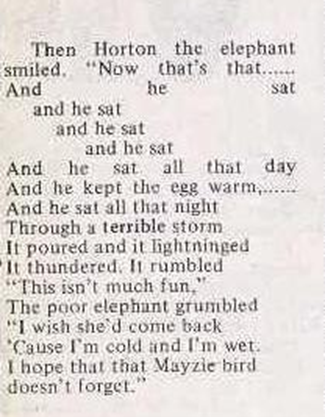
Campaign for federal funding for public libraries after the publication of the Horton report: Horton hatches the egg, Tharunka (Kensington, NSW : 1953 – 2010), Monday 17 October 1977, page 4

For those unfamiliar with Gough Whitlam and his short-lived  reformist Labor Party government, 2023 is a milestone. Labor, under Whitlam’s leadership, came to power close to 50 years ago in early December 1972 after 23 years in opposition, and controversially dismissed in November of 1975. In its short tenure this government was to change the face of Australia forever by implementing a raft of seismic reforms.… Continue reading “E.G. Whitlam’s vision for Australia’s public libraries”

Understanding the changing nature of information literacy in education

A recent study exploring how college students conceptualize the online information landscape has found that information literacy approaches relying upon a ‘static’ presentation of information, which is sought by the student, does not reflect the current environment where algorithms and information platforms push information directly to users (Head et al., 2020). As the nature of information access has changed, so too must our understandings of information literacy and how we teach it. This year, the NSW Department of Education launched the Information Fluency Framework (New South Wales Department of Education, 2022).… Continue reading “Understanding the changing nature of information literacy in education”

Library Fair (Japan) & “Connect the World via libraries” project

The Library Fair (図書館総合展) is Japan’s biggest exhibition on the theme of libraries, having started in 1999. Before Covid it was held annually in a convention center in Yokohama each November. Due to Covid it has changed to a hybrid style event, with online and small meetings in local venues.

In November 2022, four special online sessions will be conducted, both in English and Japanese, as part of an international project titled “Connect the World via libraries”. This project has been designed by HKSKH Ming Hua Theological College (聖公會明華神學院) with Japanese parties (Library Fair Committee, Rapidswide company) and the Charles Sturt University Libraries Research Group.… Continue reading “Library Fair (Japan) & “Connect the World via libraries” project”

COVID and the use of library collections

Hamid JAMali & Philip Hider

Public libraries in many countries were quick to expand and promote access to their digital collections during the COVID pandemic, particularly during periods of lockdown. We analysed the usage data of two library networks in Greater Sydney and, as one might expect, the use of digital collections peaked during the New South Wales lockdowns. The graph below shows the normalised use of digital and physical collections from 2019 to 2021, with the two lockdown periods shaded.… Continue reading “COVID and the use of library collections”

Library cards for people with no fixed address?

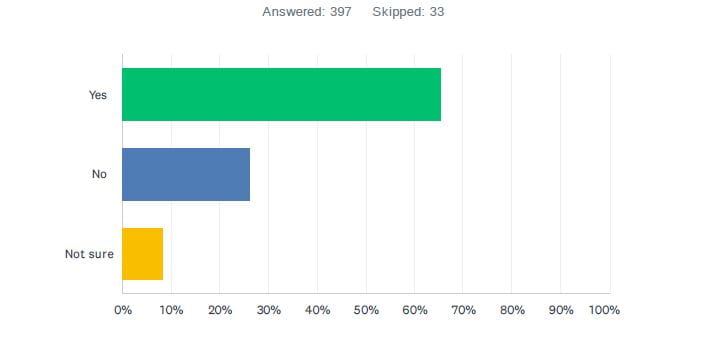
In a national survey of Australian public library workers that is part of a broader project about libraries and people experiencing homelessness, 397 people answered the question “Does your library issue library cards to people with no fixed address?” This is how the responses look:

Chart showing 65% yes response, 26% no response, 8% not sure response

26.2% (104 respondents) say they work in a public library that still requires people to have a stable home address before they are allowed to take full advantage of what those libraries can offer.… Continue reading “Library cards for people with no fixed address?”

‘I Can’t Afford to Buy All the Books I Read’

PHILIP HIDER

Reading is dead’ has been a refrain we’ve heard almost as much as ‘The book is dead’, but there’s little evidence to date that, like the book, reading, including leisure reading, is expiring any time soon. Of course, how we read is surely changing. We read text on screens not just for work and study, but increasingly for pleasure and interest. This is likely to have some effect on the way in which we read, and on what we read: whereas in the past ‘leisure reading’ may have conjured up thoughts of curling up with a paperback, nowadays it’s just as likely to be sampling a blog or a newsfeed on a ‘phone’ (though this could still involve curling up, perhaps).… Continue reading “‘I Can’t Afford to Buy All the Books I Read’”

Harvesting the Seed: The Greening Libraries Report

Jane Garner, Kasey Garrison, Sabine Wardle, Karen Bell, Sarah Redshaw

Our recent LRG Blog post, Planting the Seed: The Greening Libraries Report, gave an overview of the recently published Greening Libraries Report*, which explores how libraries in Australia and beyond support sustainability in their communities. Using a literature review and six library case studies with exemplary green practices, we have created a list of recommendations for other libraries. These recommendations fall into three categories: Community Engagement, Partnerships, and Library Management.… Continue reading “Harvesting the Seed: The Greening Libraries Report”

An initial exploration of the history of Australian libraries and collections as forces of social control and whiteness: A presentation for the 2022 American Library History Round Table research seminar

By Holly Randell-Moon, Mary Carroll and Louise Curham

At 5 AM Thursday the 16th of June Australian Eastern Standard Time (3 PM EDT Wednesday 15th June) Mary Carroll, Louise Curham (School of Information and Communication Studies) and Holly Randell-Moon (School of Indigenous Australian Studies) presented an online paper to an international audience as part of the American Library History Round Table (LHRT) research seminar. The paper, Whiteness and goodness: an initial exploration of the history of Australian libraries and collections as forces of social control, was a great example of the strength a collaborative interdisciplinary approach can bring to library and information studies and historical research.… Continue reading “An initial exploration of the history of Australian libraries and collections as forces of social control and whiteness: A presentation for the 2022 American Library History Round Table research seminar”

Planting the Seed: The Greening Libraries Report

Jane Garner, Kasey Garrison, Sabine Wardle, Karen Bell, Sarah Redshaw

Libraries are the original recyclers, and the reuse of books is a fundamental part of what libraries do. But libraries are doing much more to help support environmental sustainability. A recent research project funded by the Australian Library and Information Association and conducted by CSU academics Jane Garner, Kasey Garrison, Sabine Wardle, Karen Bell & Sarah Redshaw has led to the publication of the Greening Libraries Report*. The report explores how libraries in Australia and beyond support sustainability in their communities, and identifies six library case studies with exemplary green practices.… Continue reading “Planting the Seed: The Greening Libraries Report”

5 Reasons we need Teacher Librarians and School Libraries in 2022

Headlines that speak of the horrors of war, of the ongoing COVID-19 pandemic and our struggles to reduce climate change make it clear that students must be educated to be globally aware, creative critical thinkers, able to meet complex challenges and adapt to new situations (Celume & Maoulida, 2022; Cimatti, 2016; Trilling & Fadel, 2009). The recently published UNESCO report from the International Commission on the Futures of Education highlights the need for “a new social contract…grounded in human rights and based on principles of non-discrimination, social justice, respect for life, human dignity and cultural diversity” (International Commission on the Futures of Education, 2021, p.… Continue reading “5 Reasons we need Teacher Librarians and School Libraries in 2022”

What do librarians need to do to engage with the community through their program offerings?

As per our previous blog post from April last year, our research into the engagement of public libraries with people in the community continues. We focused on a couple of programs offered by ACT Libraries and interviewed parents/guardians of participating kids and the host librarians. The resulting qualitative and quantitative data was analysed in detail using thematic and statistical analysis techniques.

Our findings indicate some key differences in how the two programs were perceived by the library staff as opposed to the program participants.… Continue reading “What do librarians need to do to engage with the community through their program offerings?”

Public libraries supporting people experiencing homelessness

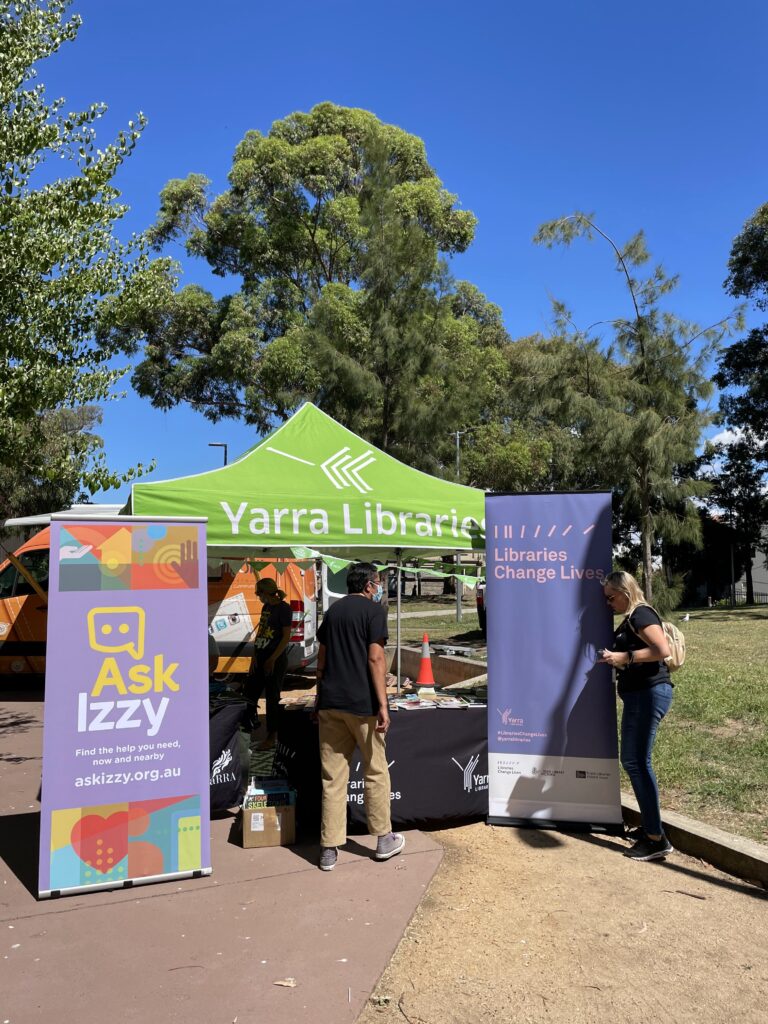
Yarra Libraries outreach service at Richmond, Victoria. Photo credit: Jane Garner, February 2022

This year I am starting a three-year project funded by the Australian Research Council that will allow me to explore how public libraries can best support people experiencing homelessness or insecure housing. The project has the following aims:

  1. To understand the service, resource and environmental needs of the Australian homeless community that could be met by public libraries in our urban, regional, and remote contexts.
  2. To understand the attitudes and concerns of public library staff, and non-homeless library users in Australian urban, regional, and remote contexts relating to the homeless community being present in their libraries.
Continue reading “Public libraries supporting people experiencing homelessness”

Australian public libraries by design

A/Prof Mary Carroll, School of Information and Communication Studies, Charles Sturt University.

This blog post is really a continuation of a previous post from December 2021 which discussed research into the establishment of early colonial library collections in Australia. This research looks at three elements of public libraries—their collection—their systems and– their space and decoration. This post will look explain why we should consider the public library as imagined and realised through its space and decoration.

Why is space and decoration important?… Continue reading “Australian public libraries by design”

A reflection on the origins of Australian public libraries

Thirteenth—The intended Library.  May every Inhabitant of Colony unite in promoting
the general diffusion of useful Knowledge!
(Sydney Gazette and New South Wales Advertiser (1813). ‘A toast’, 30 January. p.2).

The notion of the Public library is one we often assume is understood in the same way internationally. In contemporary literature the notion of the public library is characterised as being a third or community space providing a positive place for communities to come together and to freely access information and resources and address disadvantage. … Continue reading “A reflection on the origins of Australian public libraries”

Visible importance of libraries and librarians: Worldwide “live” online tours

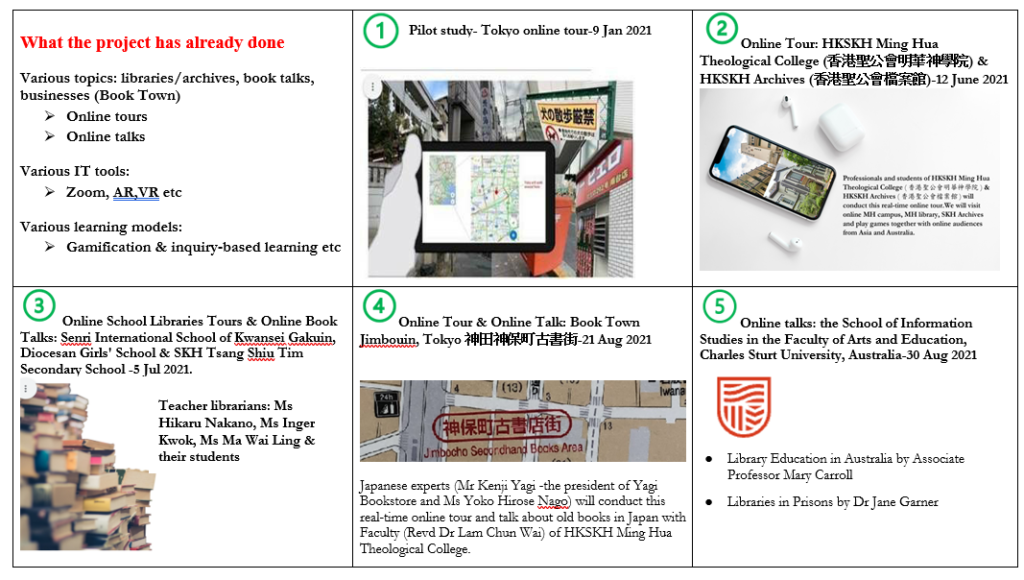
What the project has already done

The project started in January 2021. Up to now, various topics of online tours and online talks have been conducted by professionals like librarians, faculty, archivists and with students using IT tools and various learning models.

Outcomes of the project:

  1. Change challenges of new age to new worldwide powers: With these online tours and talks and international connections, we have developed a worldwide “outreach digital library” together by combining library resources, e-services, user education and use of various IT tools e.g.
Continue reading “Visible importance of libraries and librarians: Worldwide “live” online tours”

Academic library’s impact on students

By Dilini Bodhinayaka and Hamid Jamali

Academic libraries are increasingly required to demonstrate the impact of their services. Therefore, measuring library impact has become more critical than ever. As Iroaganachi and Nkiko (2016) stated, impact measurement “serves the purpose of assuring the parent institutions that the library needs the same relative share of the institutional budget, even in the budget itself is shrinking” (p. 9). Evidence of impact can also inform the decision making of library managers. 

One important area of library impact is the impact on students.… Continue reading “Academic library’s impact on students”

css.php