Blog: Library Research in Practice

Hidden archives of war

Today, 11 November, is Remembrance Day – Armistice Day – which commemorates the official end of World War I with the signing of a Peace Treaty between Germany and the Allied Powers. Yet, it is well understood that the effects of war linger long after the cessation of armed combat. In the many years since the end of each of the World Wars, rich testimony of those who lived through them, both on battlefields and the homefront, has come to light.… Continue reading “Hidden archives of war”

SICS Radio: Bringing libraries and archives to the airwaves

In September 2020, four members of the LRG – Mary Carroll, Jane Garner, Kasey Garrison and Simon Wakeling – produced the first episode of SICS Radio. We had been inspired by a talk given by Lisa McLean, Station Manager of 2mce, CSU’s community radio station which broadcasts across Wiradjuri Country to Bathurst, Orange and the Central West of NSW. Lisa had described the opportunity the station presented for staff and students to create programmes sharing their work and ideas.

We thought this was too good a chance to pass up, and after much discussion (and a few false starts) came up with the idea of a series of programmes focussing on contemporary issues in Australian libraries and archives.… Continue reading “SICS Radio: Bringing libraries and archives to the airwaves”

Valuable real estate

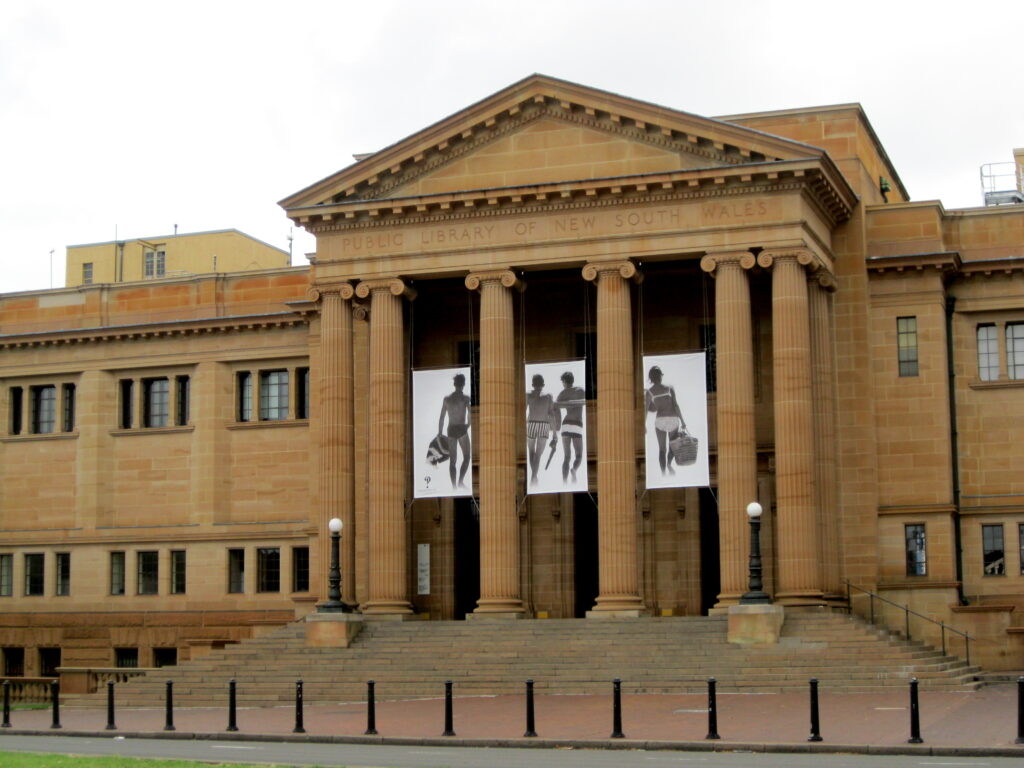
Green Square Library, Sydney

COVID has drawn attention to many things, including the way that nowadays libraries exist, and operate, not only in their physical spaces, but also very much online. However, not all their physical services and resources have digital counterparts, nor can they always be substituted with online counterparts that are completely equivalents. During the recent lockdowns and closures, libraries, especially public libraries, have provided their communities with as much continuity of service as they can, often coming up with creative workarounds.… Continue reading “Valuable real estate”

First-language reading and the role of the public library

Athena Lao from Cambridge, MA, USA, CC BY 2.0 https://creativecommons.org/licenses/by/2.0, via Wikimedia Commons

UPDATE: The final report for this project can be accessed via the State Library of New South Wales website at: https://www.sl.nsw.gov.au/public-library-services/first-language-reading

The State Library of New South Wales has funded a current research project where I am investigating the experience of reading in first-language for Australians whose first language is not English. I am exploring how it feels to read in your first language, why that experience is important, how well public libraries are able to support that experience, and I am gathering ideas from my participants about how their public libraries can do even better than they are now.… Continue reading “First-language reading and the role of the public library”

Academic libraries in LIS education research

In my recent paper about the research on library and information science education (access a free version of the paper) that was published in the Journal of Education for Library and Information Science, I examined 1,986 articles on LIS education published from 1999 to 2018 to find out what has been the concern of LIS researchers when it comes to its education. The analysis revealed that LIS researchers have been more concerned with what to teach (i.e. curriculum; 793 articles) than with how to teach (i.e.… Continue reading “Academic libraries in LIS education research”

Partnering in knowledge production: Roles for librarians in the digital humanities

By Emilia Bell and Dr. Mary Anne Kennan

A recent publication by Emilia Bell and Dr. Mary Anne Kennan in the Journal of the Australian Library and Information Association reviewed literature on roles for academic librarians in the digital humanities. It drew on literature from the digital humanities, academic librarianship, and critical librarianship.  The literature revealed shared values between librarianship and the humanities which are also related to the critical and theoretical foundations of the digital humanities. Critical librarianship provides a framework for roles that can contribute to knowledge production, not just to service provision.… Continue reading “Partnering in knowledge production: Roles for librarians in the digital humanities”

‘Steady Ships’ in the COVID-19 Crisis: Australian Public Library Responses to the Pandemic

A recent publication in the Journal of the Australian Library and Information Association describes the findings of the first of two phases of a major research project undertaken by members of the Charles Sturt University Libraries Research Group. The project team is lead by Dr Jane Garner and Dr Simon Wakeling, with the publishing group comprising researchers from the School of Information Studies: Professor Philip Hider, Associate Professor Hamid Jamali, Dr Jessie Lymn and Dr Yazdan Mansourian, and Dr Holly Randell-Moon from the School of Indigenous Australian Studies.… Continue reading “‘Steady Ships’ in the COVID-19 Crisis: Australian Public Library Responses to the Pandemic”

Assessing the impact and engagement of public libraries’ services for young children and their families

In recent years there has been a growing interest in assessing the impact and engagement of public libraries. Our research is taking a step in that direction by assessing the impact of two library services—provided by Libraries ACT—for young children and their families: (1) Giggle and Wiggle and (2) Story Time. We are studying the impact and engagement of these programs across four domains including educational, social, cultural, and economic. Our assessment will look at the gains in knowledge and skills of children as linked to the six variables identified by National Early Literacy Panel being strong predictors of later literacy development.… Continue reading “Assessing the impact and engagement of public libraries’ services for young children and their families”

Qualitative approaches in library research: The art of listening to the untold stories

There is no greater agony than bearing an untold story inside you. Maya Angelou, I Know Why the Caged Bird Sings

Every library user has a story to tell about their experience of visiting a library. Even people who don’t visit libraries have their stories about libraries and why they don’t use them. These stories are a rich source of data for Library and Information Science (LIS) researchers to gain an in-depth understanding of people’s lived experiences and perceptions of libraries. Nonetheless, there are few opportunities for people to narrate and share their stories of libraries, and as a result, most of them remain untold and unheard.… Continue reading “Qualitative approaches in library research: The art of listening to the untold stories”

It’s the ‘vibe’ of it: The complexity of open access policies in Australia

Guest post by Dr Danny Kingsley, Visiting Fellow, Australian National Centre for the Public Awareness of Science

By now, most people in the academic space have heard of the term ‘open access’, even if understanding of what the term means and levels of engagement or enthusiasm vary. We are a group that is undertaking what we thought would be a straightforward study – an analysis of open access policies in universities in Australia.

As far as we can tell, this has not been done to date, so this work would be a ‘line in the sand’, not unlike a 2009 study looking at the ‘state of the nation’ of Australian institutional repositories, undertaken by two of the current research team.… Continue reading “It’s the ‘vibe’ of it: The complexity of open access policies in Australia”

Missions and visions: Do public libraries have a consistent picture of their role?

Professor Philip Hider

The cynic might be of the view that what public libraries set as their official ‘vision’ or ‘mission’ is intended as much for the benefit of their political overseers as it is for their publics. Nevertheless, many public library authorities do publish some sort of statement about how they see themselves contributing to their communities, about their role. Many of these statements can be found somewhere on their website, albeit sometimes in a rather remote corner of it.… Continue reading “Missions and visions: Do public libraries have a consistent picture of their role?”

“It’s something I always wanted to do”: Serious leisure, self-actualisation and social engagement

I recently published a paper in the Journal of Documentation (Mansourian, 2021) to report the findings from a research project that I have done from 2018 to 2020 in the School of Information Studies at Charles Sturt University. In this project, I explored various information activities of serious leisure participants to discover and depict their information seeking and sharing patterns. My research approach was qualitative in an interpretive paradigm, and I used semi-structured interviews to collect the data. Then I used thematic analysis method to analyse the collected data and identify the concepts and categories.… Continue reading ““It’s something I always wanted to do”: Serious leisure, self-actualisation and social engagement”

I watch the birdwatcher: An introduction to serious leisure

Yazdan Mansourian, PhD, AALIA

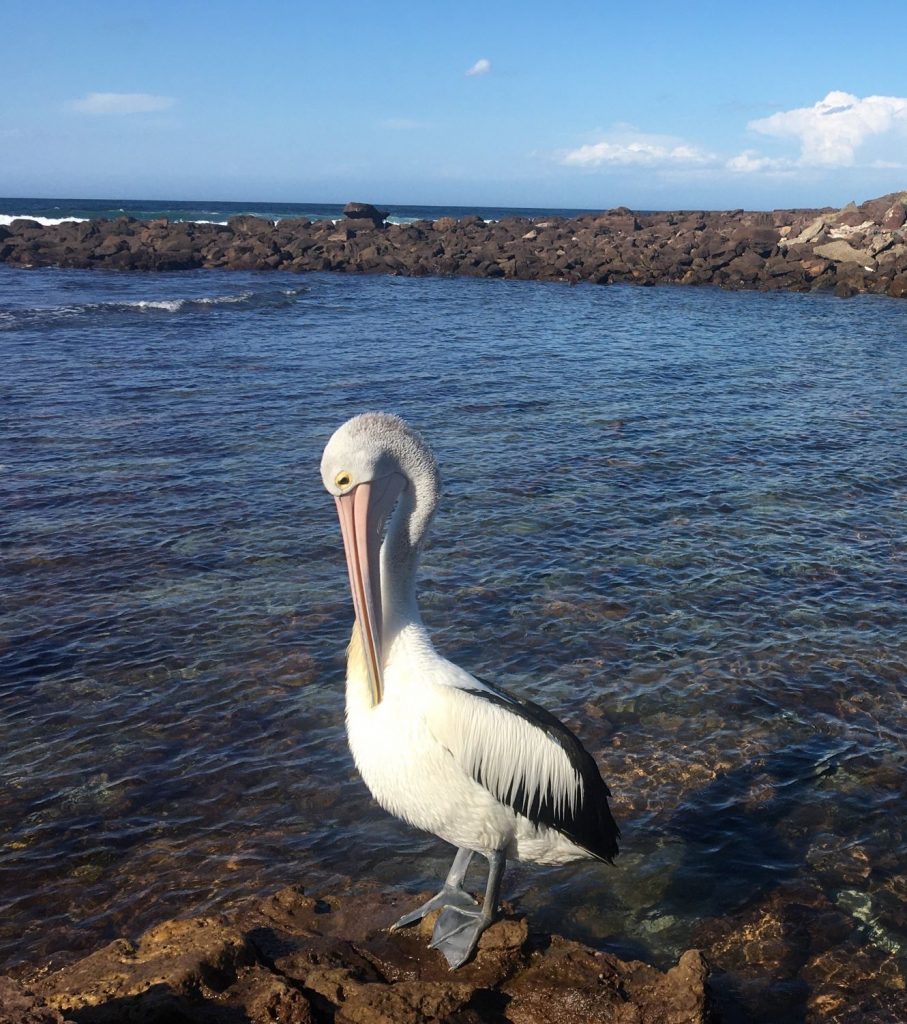
Photo by Yazdan Mansourian, Shellharbour Beach, November 2020

My research program is about serious leisure. If you have not heard this term before, you might find it puzzling. This even may look like an oxymoron. How come something is serious and leisurely at the same time? However, it is not as absurd as it looks. Serious leisure includes all forms of hobbies, amateur or voluntary activities which require long term commitment and some specific knowledge or skills.… Continue reading “I watch the birdwatcher: An introduction to serious leisure”

Defining the value and impact of libraries

Associate Professor Hamid Jamali

Value and impact are terms that are sometimes loosely defined and used. Assessing and providing evidence of the value and impact of libraries is something that many researchers and practitioners, at least over the last two decades, have tried to address. The reason for great attention to value and impact has been partly the pressure on libraries to demonstrate their value and impact in order to justify their budget or investment by stakeholders. Terms such as value, impact and outcome have been used sometimes interchangeably without clear differentiation.… Continue reading “Defining the value and impact of libraries”

Unearthing controversies in Special Collections

Dr Jessie Lymn

There’s an oft-cited question that gets asked when delving into the bowels of academic library special collections – “just what is so special about special collections?“. For university libraries especially, the special collections (or rare books, or manuscripts, or many other titles) are where some of the most socially, culturally and economically valuable parts of the library’s collection are held, and also some of the most diverse and controversial.

These challenges of collecting, preserving and managing the diversity of values in special collections is both demanding and productive, and can be considered reflective of the same challenges faced during the ‘first life’ of these publications and objects.… Continue reading “Unearthing controversies in Special Collections”

A Social Worker in the Library – a new article tells the Melbourne story

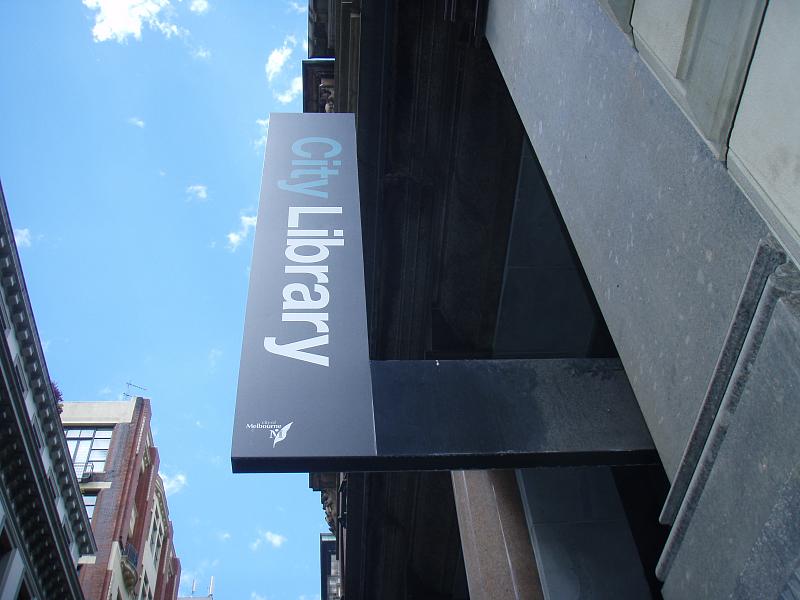
Melbourne City Libraries

Having seen news articles like this one: ‘Libraries start new chapter to support vulnerable’ , I became interested in the role that public libraries can play in working with vulnerable members of our communities. If Melbourne City Libraries had employed a social worker to help library staff with this role, I thought there must be lessons that can be learned from that experience. After arranging a meeting with Leanne Mitchell at the Melbourne City Library, I was able to talk with her about the project, where it was going and what steps they had taken to evaluate the work they were doing.… Continue reading “A Social Worker in the Library – a new article tells the Melbourne story”

Are Australia’s new public libraries here for the long term?

#1202 Green Square Library

When I joined the School of Information studies at Charles Sturt University back in May 2019 I was intrigued to learn about the Study Visits that were run for students. These are week-long visits to an Australian city or region, with an itinerary packed with visits to interesting libraries and archives. As well as providing incredibly valuable learning opportunities for students, these visits also represent opportunities for lecturers to re-engage with practice, and see first-hand the work that information professionals are doing.… Continue reading “Are Australia’s new public libraries here for the long term?”

Public libraries post-COVID

While we continue to research the ways in which libraries are responding to the challenge of the COVID-19 pandemic, we might do well to also consider what the situation will be like for libraries once the virus is finally brought under control. It’s unlikely to be the same. Clearly the measures that have been put in place in most countries across the world to ‘flatten the curve’ will have a lasting economic impact, the result of which will almost inevitably see increased pressure on public spending.… Continue reading “Public libraries post-COVID”

Library resources provide experiences as well as information

Library cataloguers have spent a hundred plus years indexing the subjects of books and other resources, but paid relatively little attention to some other aspects, such as their genre. For example, the Library of Congress Subject Headings are pervasive in countless library catalogues, and have been since the first half of the last century, yet the Library of Congress Genre/Form Headings (LCGFT) were only established a few years ago, and are still something of a work in progress.

A series of studies I’m presently carrying out is assessing the applicability of the LCGFT by comparing them with other genre lists, and by comparing their use with that of other terms that have not yet made it into LCGFT.… Continue reading “Library resources provide experiences as well as information”

Special issue of the Journal of the Australian Library and Information Association

Prof Philip Hider has just written up a guest editorial for an upcoming issue of the Journal of the Australian Library and Information Association featuring some of the papers presented at the Fifteenth Australasian Conference on Research Applications in Information and Library Studies (RAILS), held on 28 and 29 October last year at St Mark’s National Theological Centre in Canberra. Philip was chair of the conference’s program committee, with the event being hosted by CSU’s School of Information Studies. The conference’s themes was ‘Towards critical information research, education and practice’, and if ever there was a time for a critical approach this is probably it, with so many competing messages being peddled by various powers around the world.… Continue reading “Special issue of the Journal of the Australian Library and Information Association”

Libraries in Australian Juvenile Justice Facilities

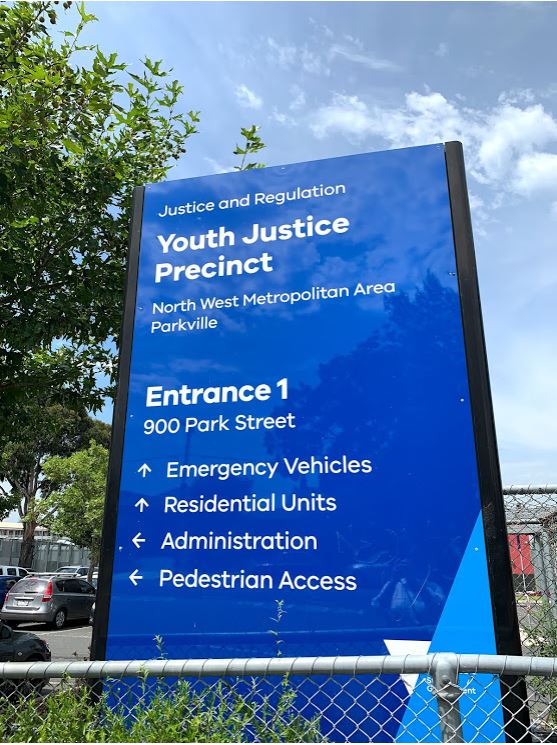
Parkville Justice Centre sign

Dr Jane Garner

In late 2019, I undertook a unique study of the status of libraries in Australia’s juvenile justice facilities. The goal of the study was to discover how many libraries were in our juvenile justice facilities, how they were staffed, funded, and used by the young people living in correctional detention. As each facility houses a registered secondary college that all residents must attend, there was a particular interest in how these libraries were contributing to the education of detainees.… Continue reading “Libraries in Australian Juvenile Justice Facilities”

Developing of digital literacy with libraries and digital technologies from an international perspective

COVID-19 has changed a lot of our lives, study and work ways and made us depend more on IT. At the same time, COVID-19 has exposed digital divide problems. User education and development of digital literacy are important missions of worldwide libraries, no matter if they are academic, special, school or public libraries. As librarians/educators, how can we face these changes and develop digital literacy for library users, by library user education and taking advantage of easy to use IT tools such as VR, drones and digital humanities tools.… Continue reading “Developing of digital literacy with libraries and digital technologies from an international perspective”

css.php